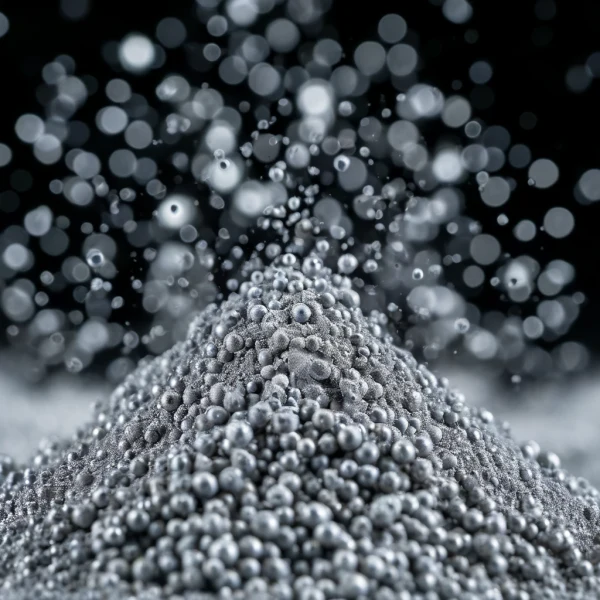
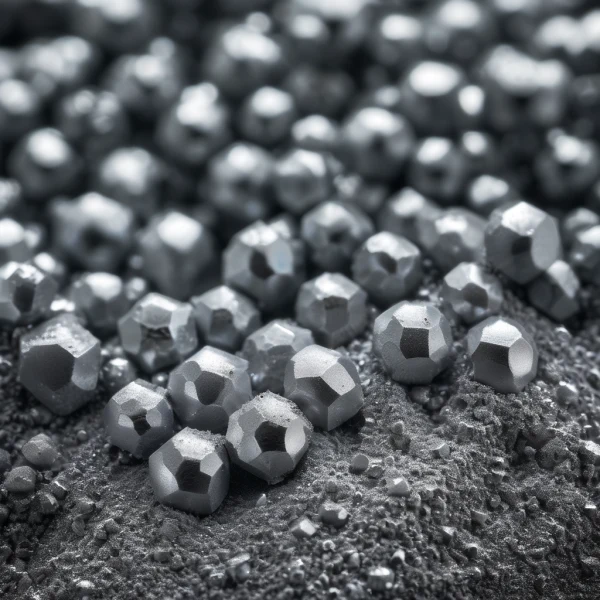
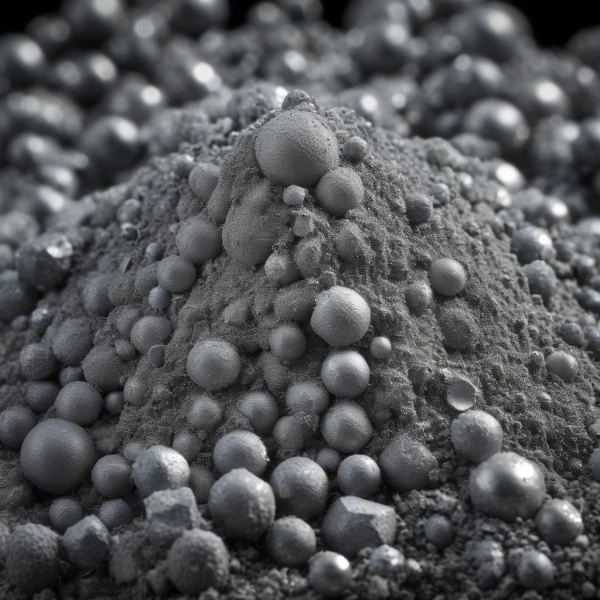
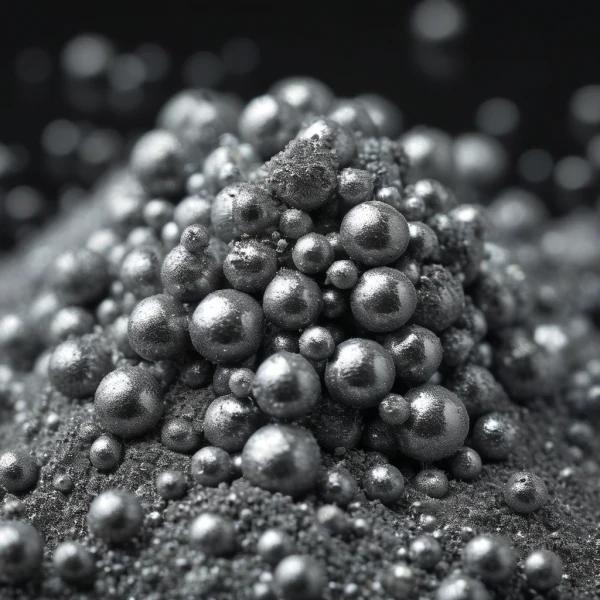
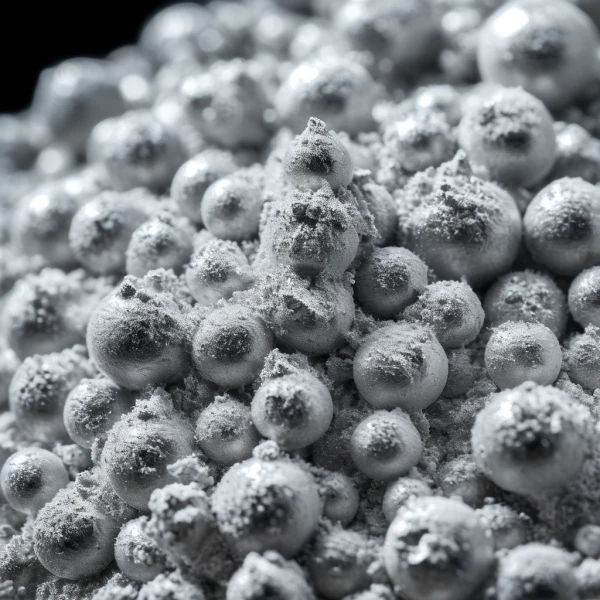
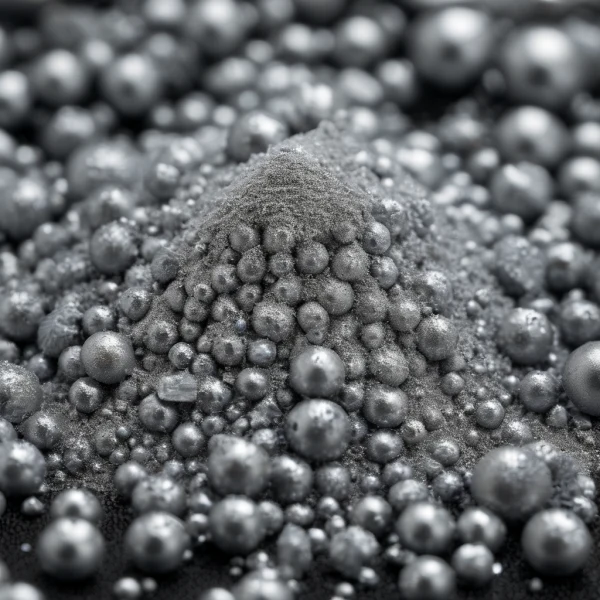
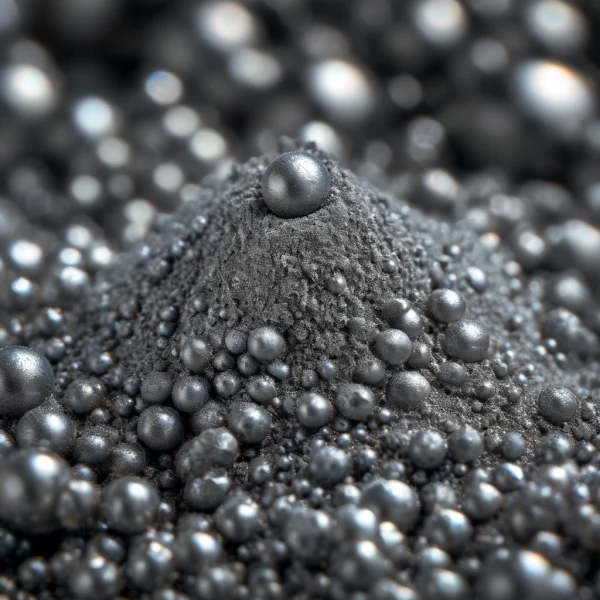
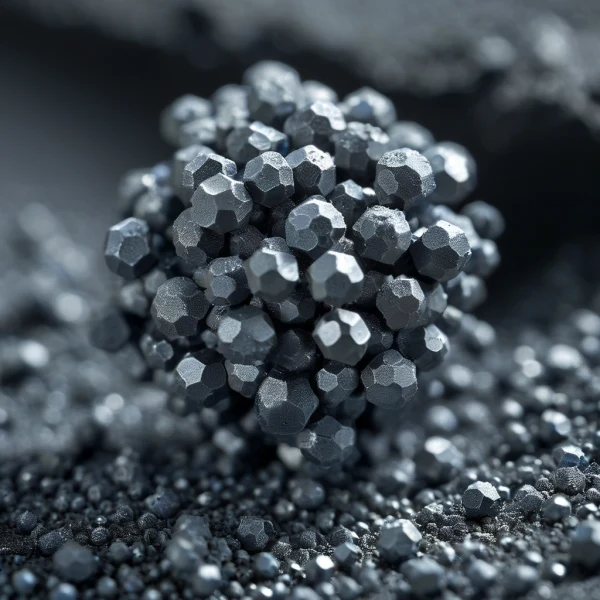
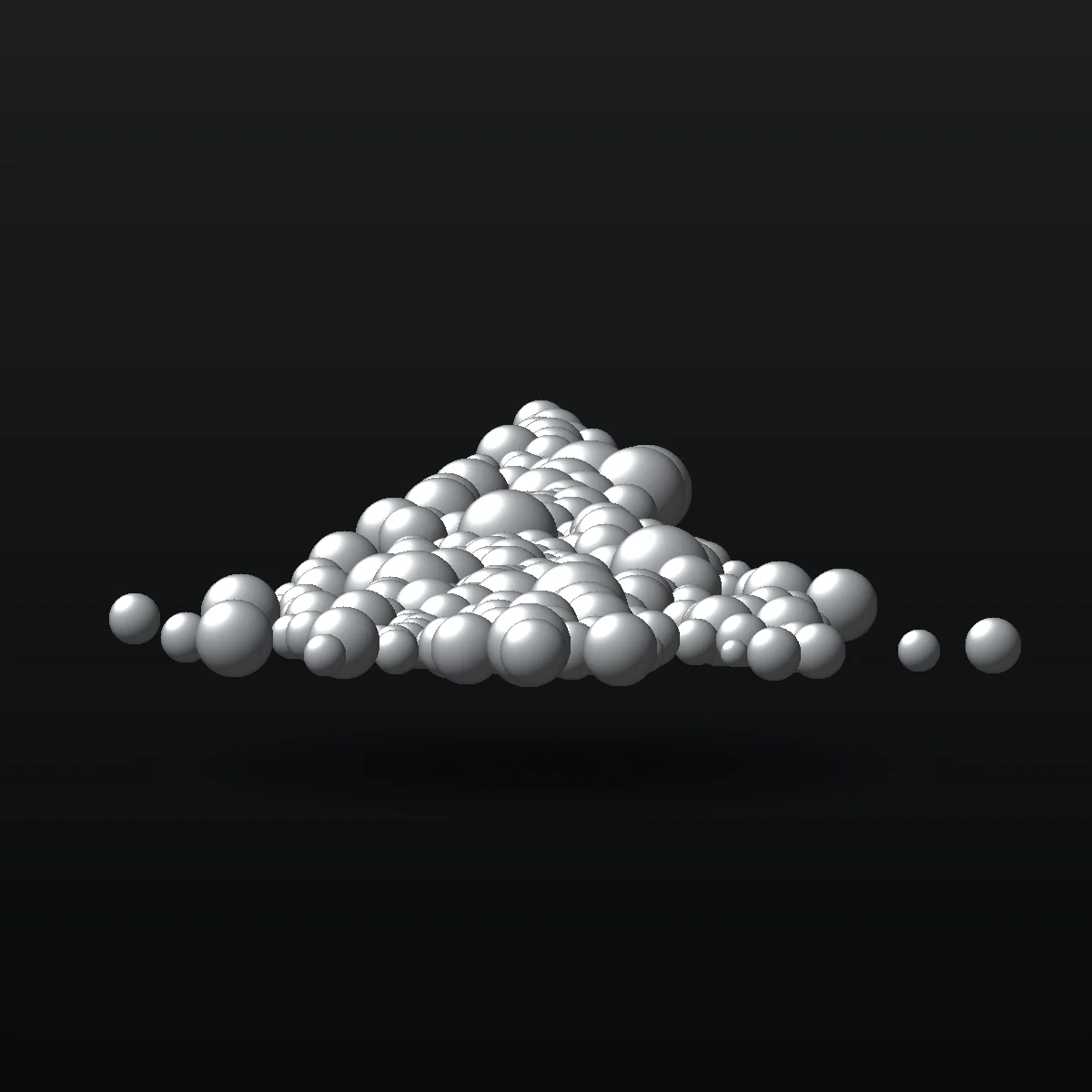
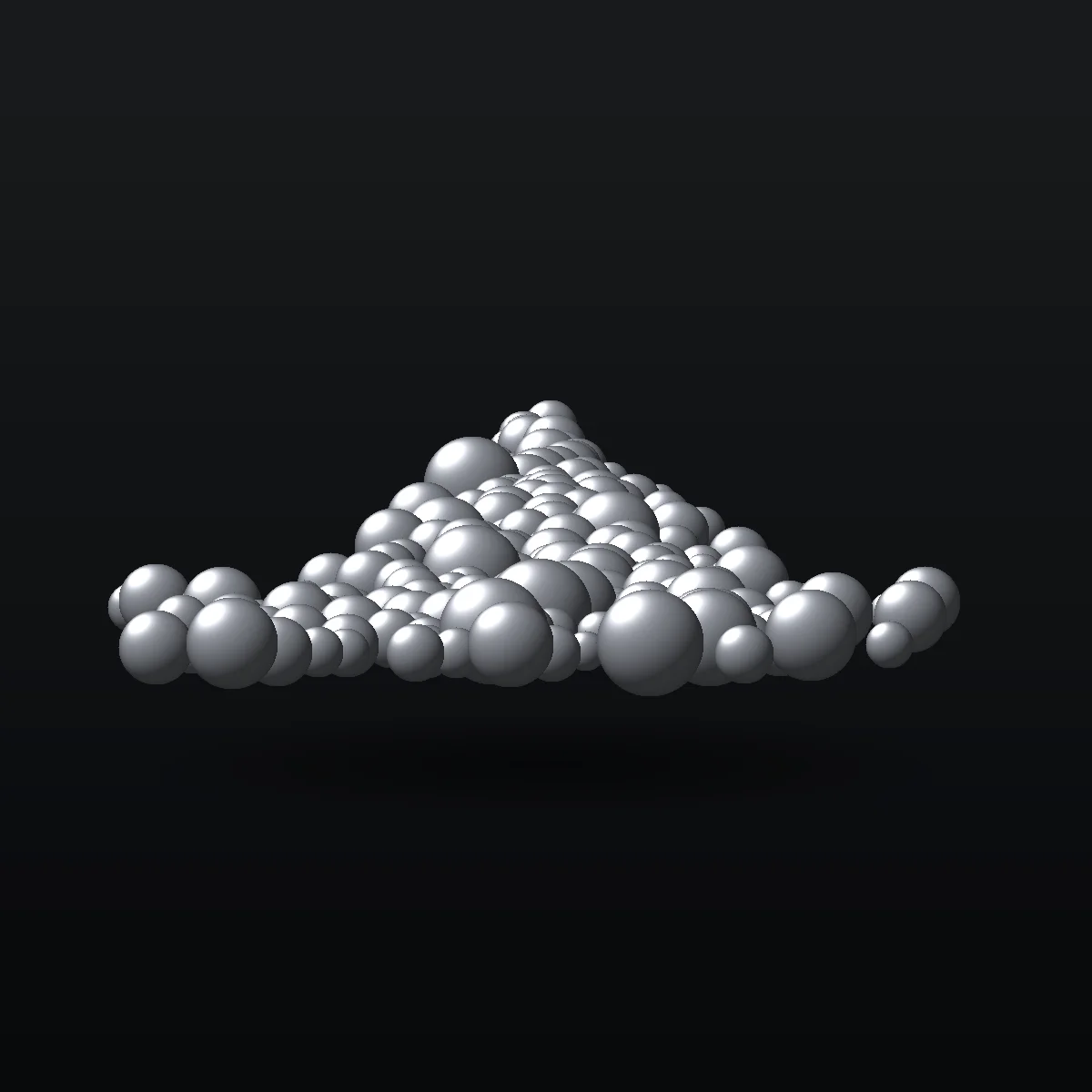
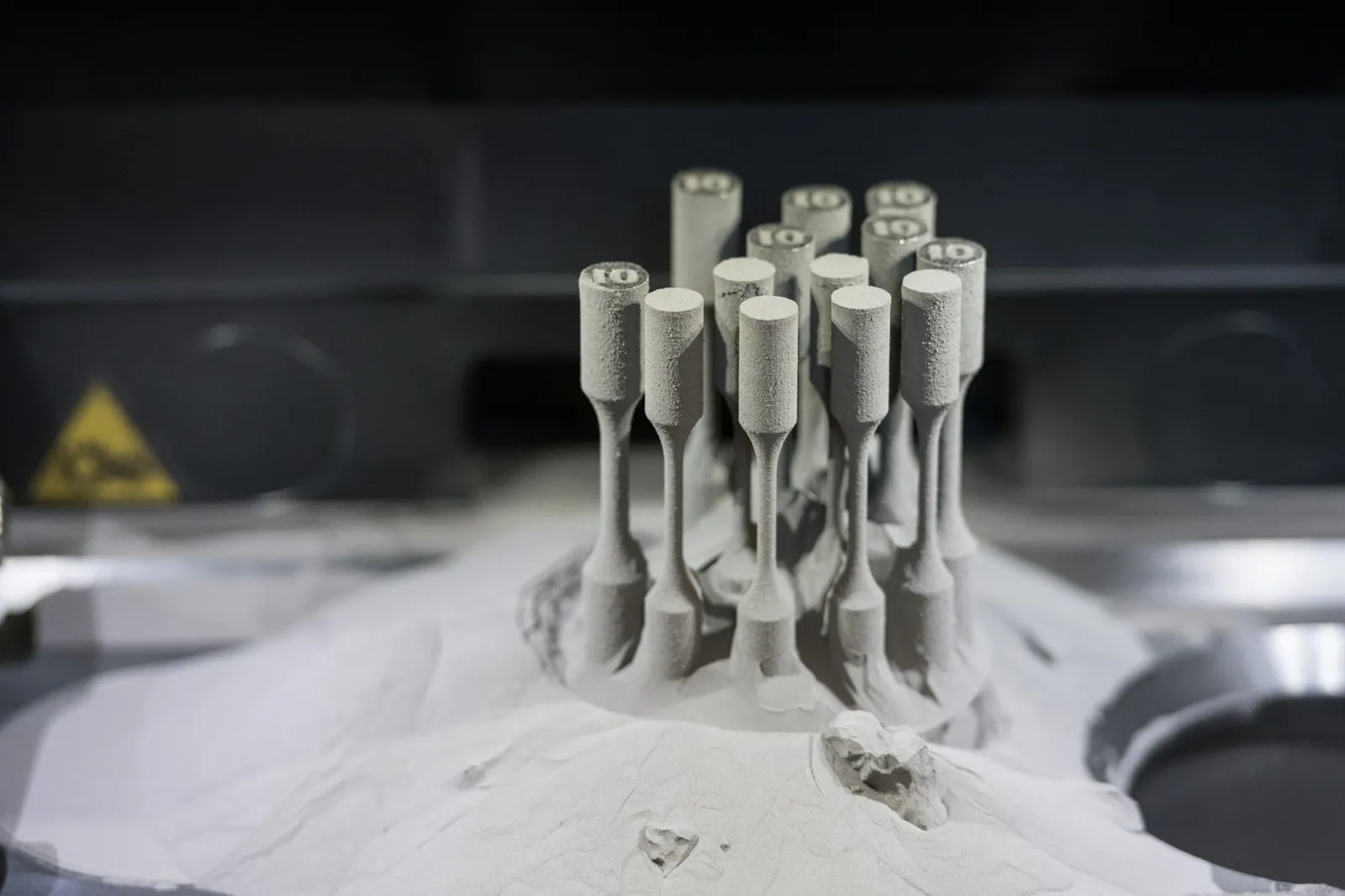
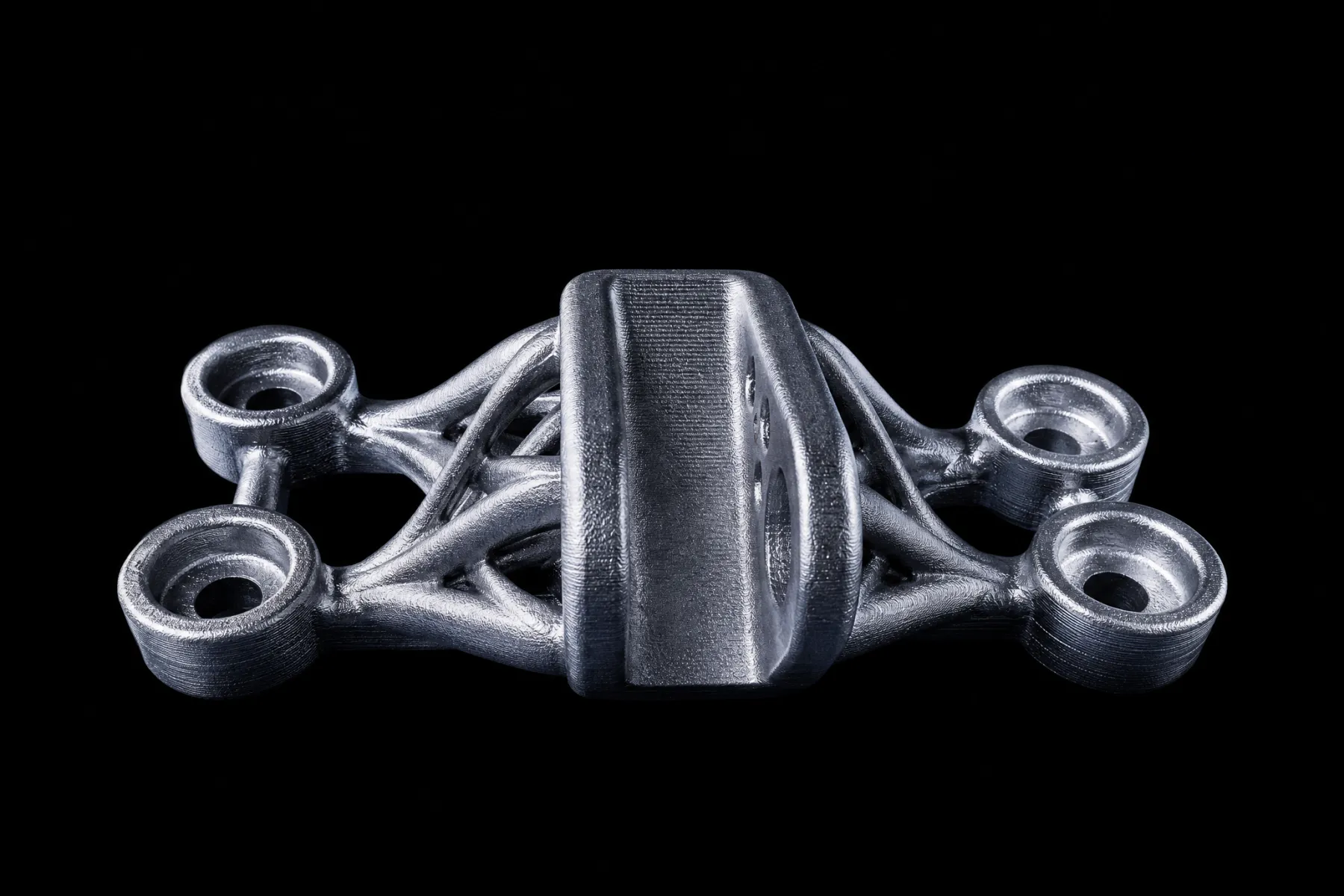
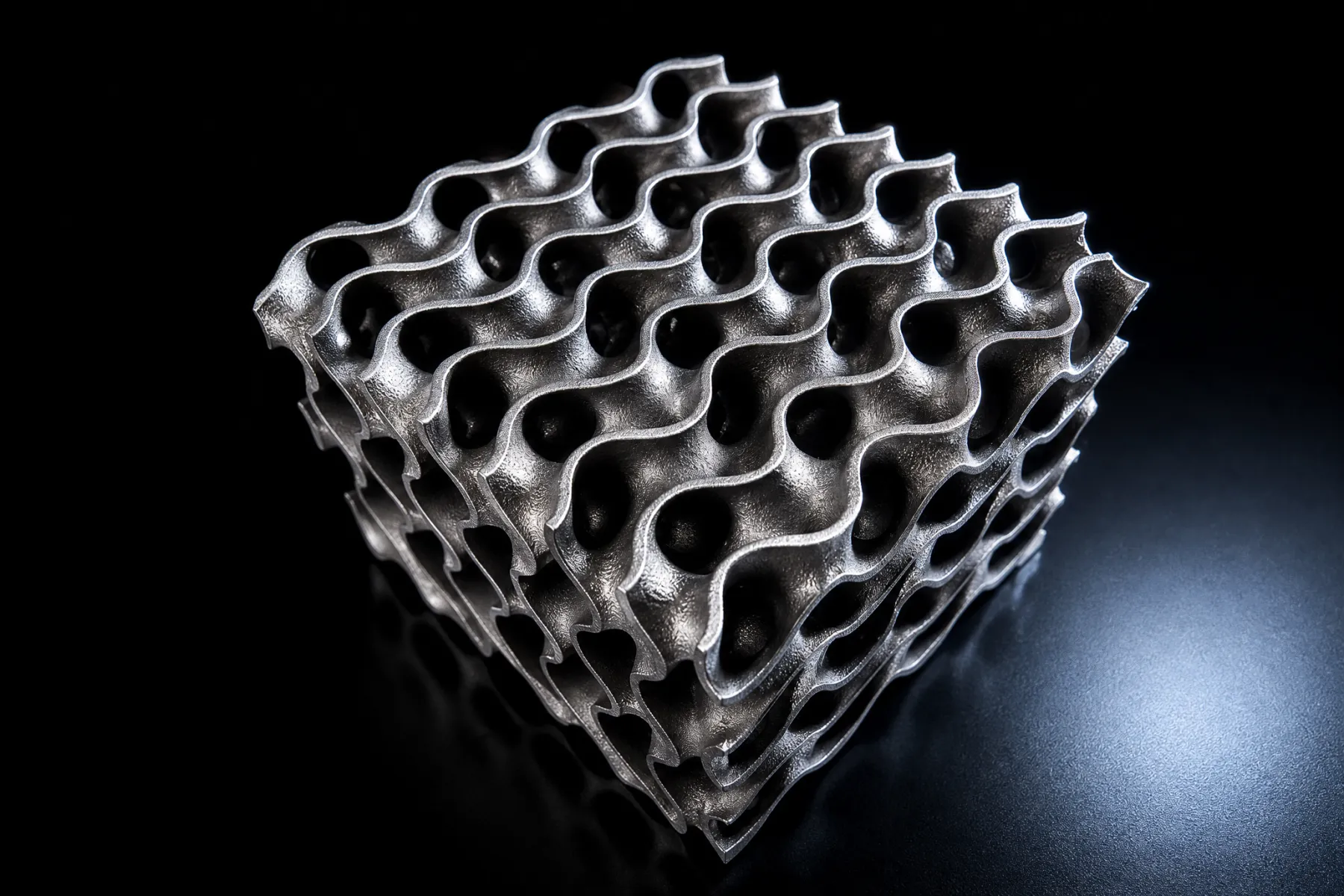
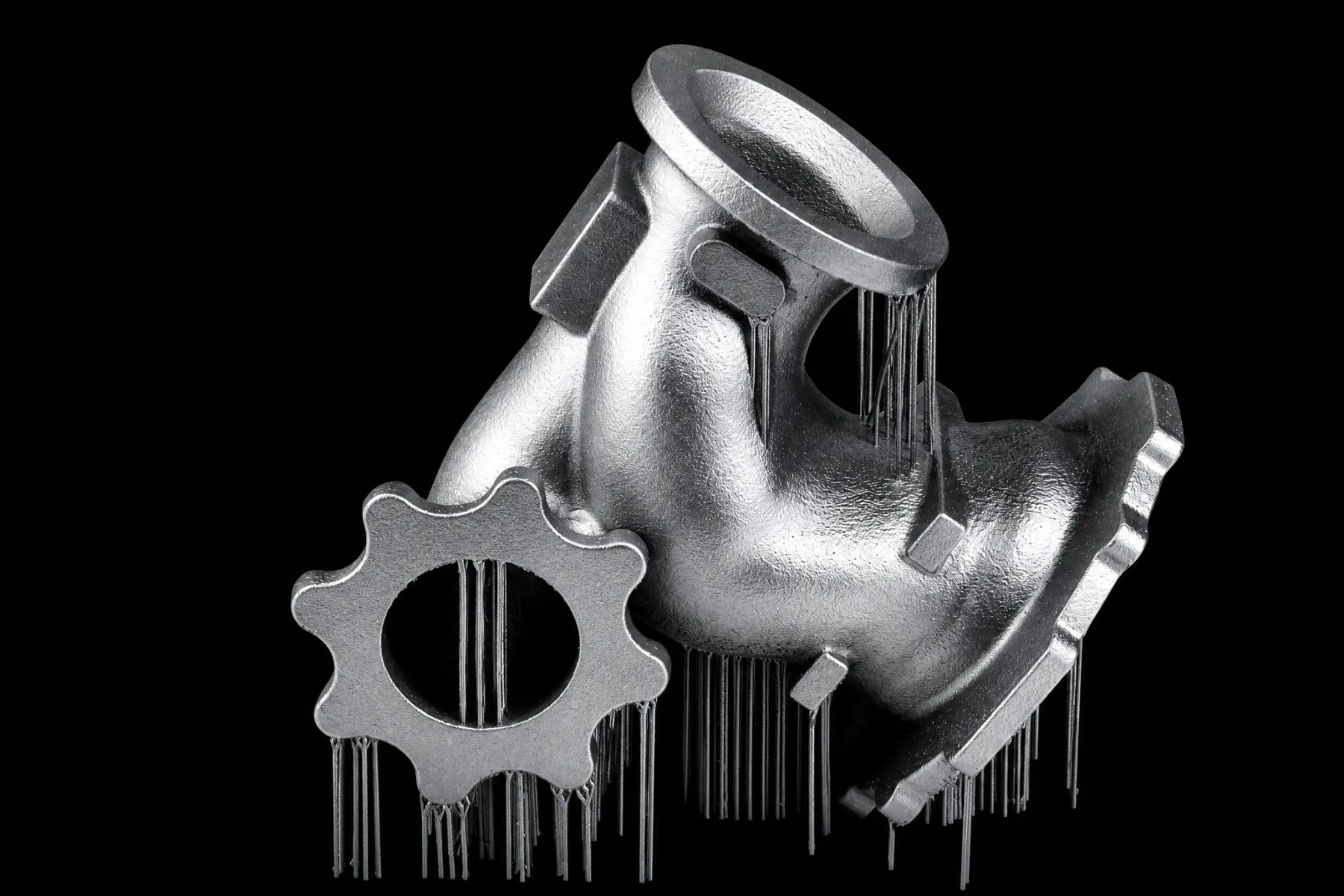
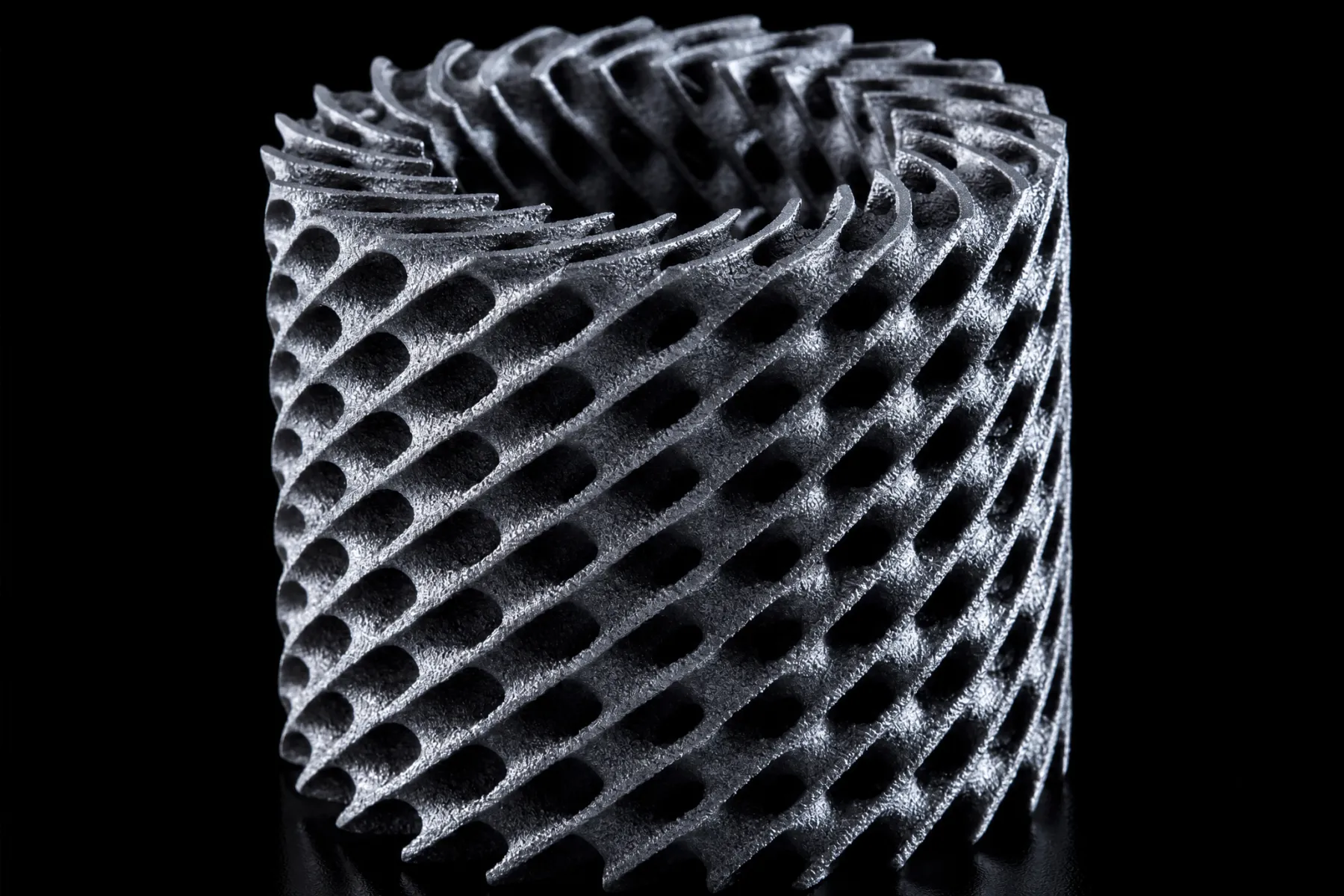
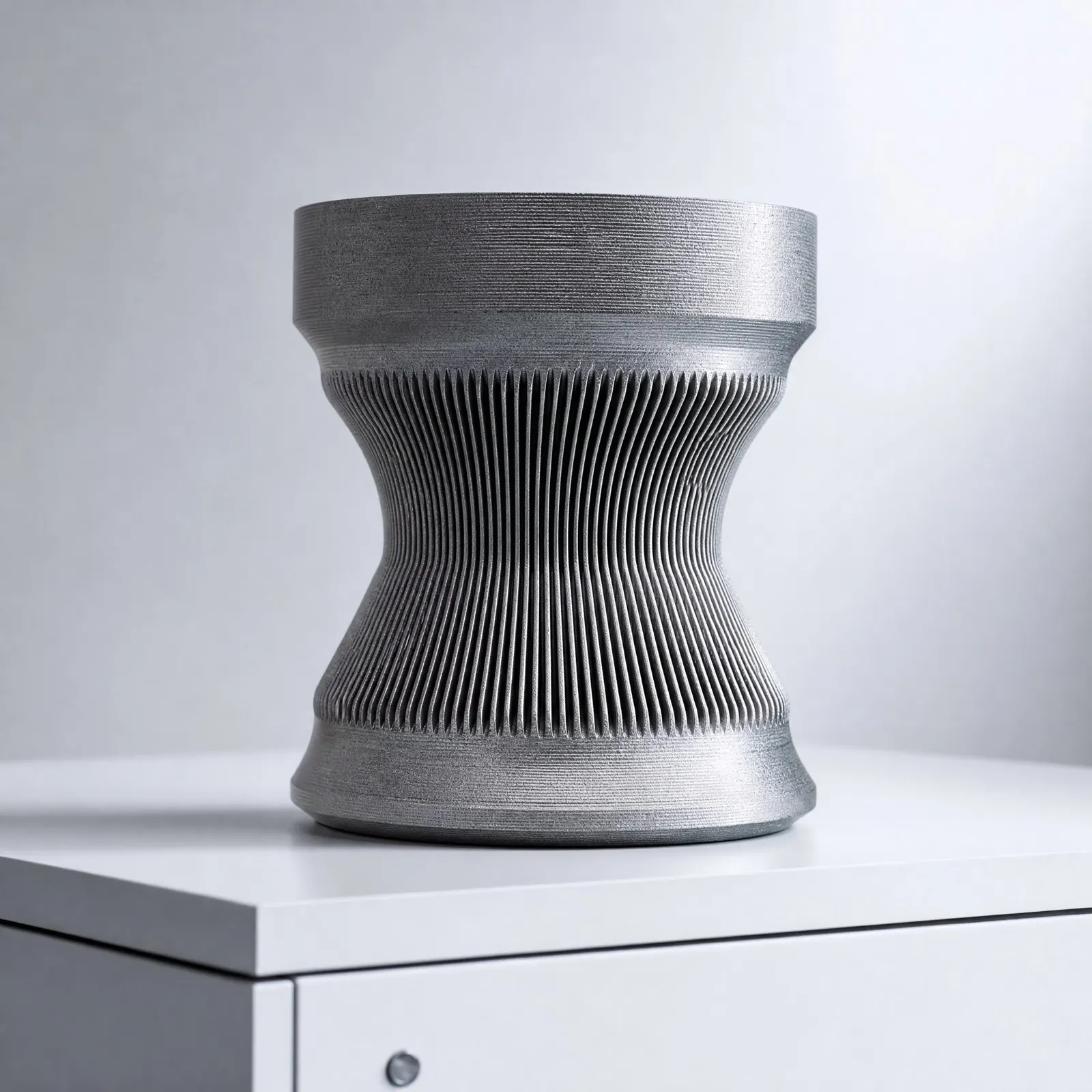
A laser builds your part one hair-thin layer at a time, straight from metal powder. This is metal 3D printing (additive manufacturing) — and it can hide cooling channels inside solid metal, cut weight in half with internal lattices, and merge a 60-part assembly into one piece, while wasting up to 90% less raw material than machining on complex parts. We run every step in-house: design, printing, finishing, inspection, certification.
Straight off the printer, your part is accurate to about a tenth of a millimeter — and after machining, to half that. The metal comes out over 99.5% solid, with walls as thin as half a millimeter.
CNC carves your part out of solid billet and turns most of it into chips — on complex titanium parts, over 90% of the metal is wasted. Additive grows the part from powder in layers thinner than a hair, using only the material the design needs. Unmelted powder is sieved and reused.
No drill can curve inside a solid block. A grown part carries cooling channels that follow its contour, internal galleries a few hair-widths wide, honeycomb cores that stay strong at half the weight — sealed inside the metal, impossible to machine after the fact.
Cutting, casting, welding, assembling — separate trades, each with its own tooling and queue. Additive collapses them into one digital step: a sixty-part assembly becomes a single grown piece with no joints to fail. And with no mold to pay off, the first part costs like the five-hundredth.
An engineer reviews your 3D file first — wall thickness, supports, the right alloy — and sends back an improved design with a tolerance map. Problems are fixed while they are still free to fix.
Your build runs on our own floor — no hidden subcontracting. HIP and third-party inspection are coordinated with specialist facilities and disclosed on your quotation. The machine, powder lot and inspection records are named on your quotation and in your traceability package.
Support removal, CNC machining, polishing, blasting, passivation, assembly — performed by Zeming's team. One supply chain from powder record to crated part.
New to alloys? Titanium = light & strong · stainless = dependable value · aluminum = light & economical · Inconel = extreme heat · cobalt chrome = medical & wear parts. Not sure? We recommend one with your quotation.
Ti6Al4V Grade 5ASTM F2924
Ti6Al4V ELIASTM F3001
Inconel 718AMS 5662
Inconel 625AMS 5596
AlSi10MgASTM F3318
316L StainlessASTM F3184
17-4PHASTM A564
Cobalt ChromeASTM F3213
Tool Steel MS11.2709
CuCrZr CopperAMS 5221Full property table for all ten alloys — yield, tensile, hardness, standards →
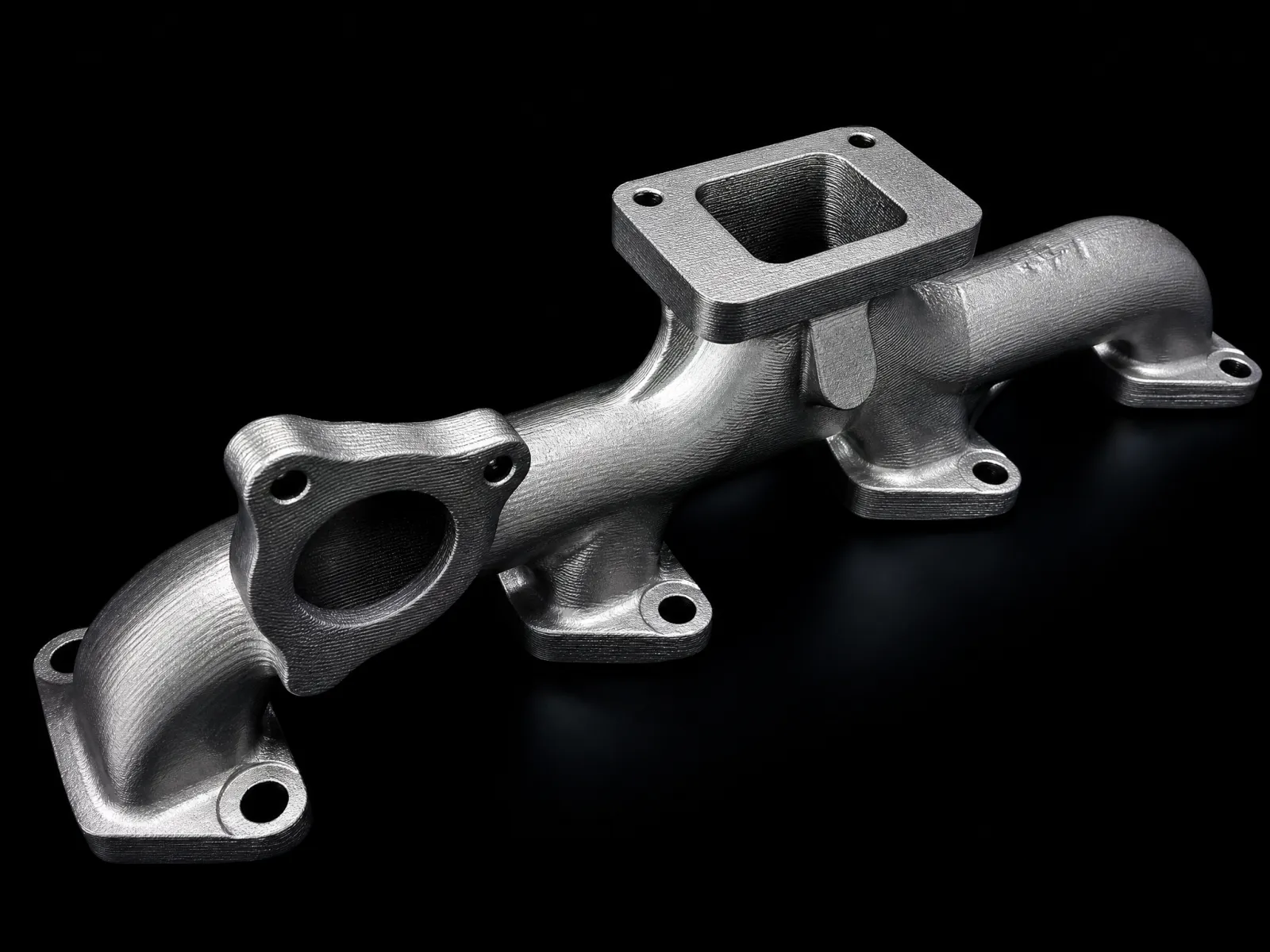
No mold, die, or fixture sits between a design change and a physical part. A custom implant in 4–5 days instead of 6–8 weeks. While a casting house is still quoting the mold, you can hold hardware — and two revisions of it.
GE Catalyst engine cycle: 4–10 years → ~2 years
See the six-stage process →Copper inside steel, Inconel graded into stainless — metals that can't be welded, fused into one monolithic part with no joint to fail. A printed steel mold pin carrying a copper cooling core runs 100,000+ brushes a day.
−50–66% cycle time on copper-in-steel mold inserts
Explore the alloy portfolio →A cutting tool only reaches the outside of a part. Metal 3D printing builds from the inside out — conformal cooling channels that follow the part's shape, lattices that keep material only where stress demands it, passageways thinner than a hair.
Cooling time −55% on printed conformal channels
See it in production →The reframe: metal AM rarely wins on per-part price — it wins on total program cost. Where it changes the economics →
Each project is managed by a single engineer. The build runs on our own floor — the machine and powder lot are named on your quotation and in your traceability package.
IN-HOUSEWe check your 3D file — will it print, in which metal, to which tolerance — and send back a design that's cheaper and stronger to print.
IN-HOUSEWe pick the right in-house machine for your part — and write its name on your quotation.
IN-HOUSEYour part is printed with logged machine settings and a tracked powder batch — every step documented.
IN-HOUSEPrinting is half the job. We cut supports, machine, polish and treat the surface — in-house at Zeming.
IN-HOUSEWe confirm the metal is the right alloy (XRF), measure every critical dimension (CMM), and scan inside for flaws (NDT) — with reports you can keep.
IN-HOUSEMaterial certificates, inspection reports and export paperwork in one package — shipped under Shanxi Zeming.
Every stage, with the parameters that decide your cost and lead time →
Metal AM is not always the right answer — and a supplier that says otherwise is selling machine hours, not parts. Here is the selection logic we actually use when quoting.
| Your situation | Recommended route | Why |
|---|---|---|
| Complex internal geometry — conformal cooling channels, lattices, internal passageways | Metal AM | CNC tools only reach the outside; casting cannot core these shapes |
| A multi-part assembly you want in one piece | Metal AM | Part consolidation removes joints, fasteners and assembly labor |
| Titanium / Inconel, low quantity, tight deadline | Metal AM | No tooling or mold lead time — Express builds leave in 3–5 days |
| Mould insert needing conformal cooling | Metal AM | Drilled straight channels cannot follow the part contour |
| Simple prismatic or turned parts, quantities of thousands | CNC machining | AM rarely wins on per-part price at volume — we will say so |
| Large simple shapes, loose tolerances, high volume | Casting | Once the mold is amortized, casting is cheaper per part |
| Unsure where the crossover sits | Send the CAD | We quote AM and the conventional route side by side, with the crossover shown |
Yes. Five metal 3D printing systems run in-house at Zeming, alongside design review (DfAM), CNC machining, finishing, assembly, inspection, certification, and export — everything under one roof.
A small, simple part typically runs $50–500; a large or complex titanium or nickel part runs $500–10,000+. The print itself is only part of the cost — finishing and quality checks usually decide the final number. We show every line item, so you compare total program cost, not just per-part price.
Express builds ship in 3–5 days. Standard: 2–4 weeks. Certified aerospace or medical: 4–8 weeks. We quote the timeline stage by stage, because finishing and certification drive lead time as much as the printing itself.
Yes. Aerospace parts print on our in-house laser powder bed fusion (L-PBF) line, with first-article inspection (FAI) documentation managed by our engineering team. We hold ISO 9001, 14001 and 45001; where AS9100D or NADCAP is required by contract, we tell you our exact status up front so you can decide.
Send your CAD to mam@zemsteel.com. We'll respond within 48 hours with a design review (DfAM) and a firm quotation. See pricing details.
Send a STEP file or drawing to mam@zemsteel.com. Engineering responds within 48 hours with a design review (DfAM) and a firm quotation.
Get a quote →